
A stiff sourdough starter is a mixture of flour and water that has been fermented by naturally occurring wild yeast and beneficial bacteria found on the flour and in your kitchen environment.
It contains microorganisms that multiply and make your bread dough rise naturally without using commercial yeast. The resulting bread loaf usually is slightly sour if you ferment less and more sour if the fermentation time is more.
I enjoy making stiff sourdough starter using freshly milled whole wheat flour. It tends to rise more quickly than starters made with white flour or store-bought flour because it is closer to its natural state. We simply mill the living grain and benefit from the naturally occurring nutrients and microorganisms present in the grain.
I use my stiff sourdough starter for all my sourdough recipes ranging from brownies, cookies, bread, milk bread brioche or pizza. Let’s learn how simple is to make stiff sourdough starter with this recipe, and feed it continuously and maintain the starter for life long!
If this is your first time making stiff sourdough starter using freshly milled whole wheat flour, this is the post you need to master. If you already know how to make stiff starter and you need info on how to maintain it then click here.

Table of Contents
How to Make Stiff Sourdough Starter Using FMF in Two Steps-for the first time makers
Understanding Active starter, Sourdough Discard and Maintenance Starter
How to maintain your Stiff Sourdough Starter forever and use it in your sourdough recipes
How to use the maintenance starter kept in the fridge for baking sourdough recipes
How to feed your maintenance starter from the fridge and maintain it
How do you convert your fridge maintenance starter into an active starter for baking the same day
How many times should I feed my starter in a week?
How can I use sourdough discard? Should I throw it away?
Benefits of Consuming Sourdough Recipes
Ingredients
Freshly milled flour(fmf): This is the main ingredient in making stiff starter. I prefer hard white wheat or red white wheat grains milled into flour and use either of them in the starter recipe.
Old Starter: If you already have an existing sourdough starter—whether it’s an old white flour starter, a store-bought whole wheat starter, or even just half a teaspoon from a friend—you can use it as your base.
I don’t prefer starting from scratch, because building a starter from flour and water alone takes several days of repeated feeding and stabilization. Instead, I prefer using an existing starter and converting it into a freshly milled sourdough starter, which can be ready within a few hours through proper feeding and activation.
Water: Any drinking water.
A wide bowl: to mix the ingredients well with your hands.
A glass container: to place the dough and let it rise and monitor the rise.
Cling film or muslin cloth: to cover the glass container. I used cling film and poked holes upon the cling film with pin to let the air enter the fermentation process.
How to Make Stiff Sourdough Starter Using FMF in Two Steps-for the first time:
1. In a wide bowl, add 40 g of water, 1/4 tsp old sourdough starter and 50 g of freshly milled flour and knead for 2 minutes with your fingers until you get a soft tortilla/roti consistency dough.
The old starter can be any sourdough starter made with white flour or a sourdough starter made with store-bought whole wheat flour, or even a small amount of starter shared by a friend.
I prefer adding very little old starter as i want 99.999% freshly milled sourdough starter.
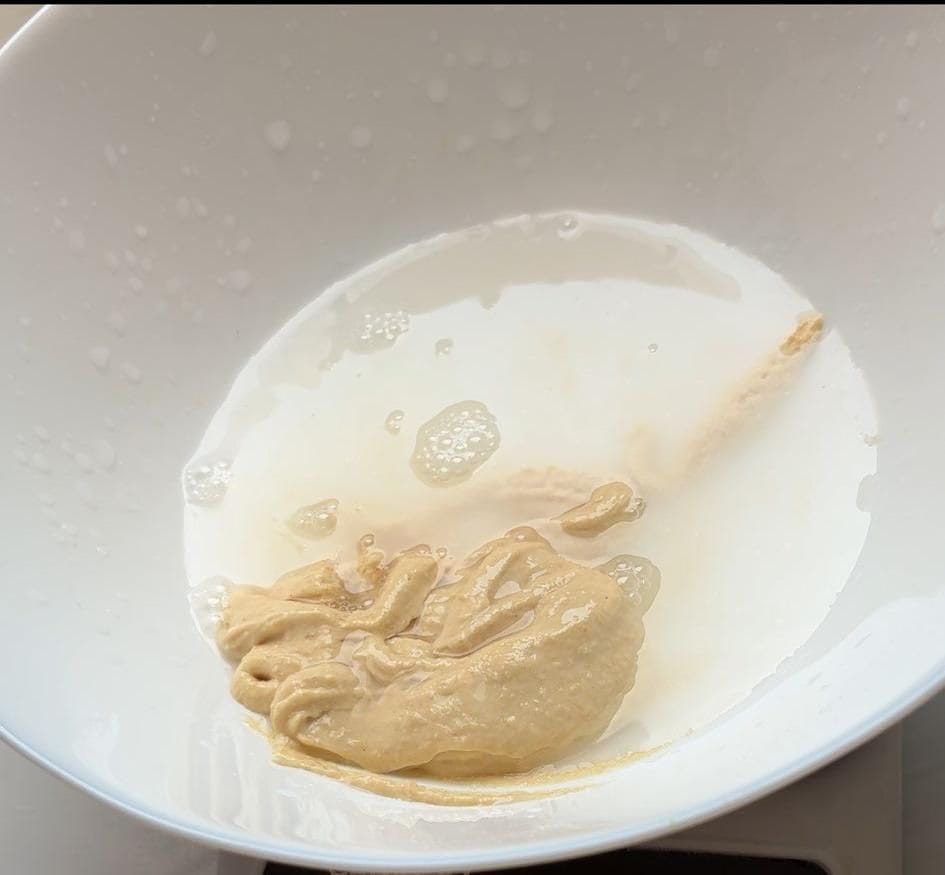
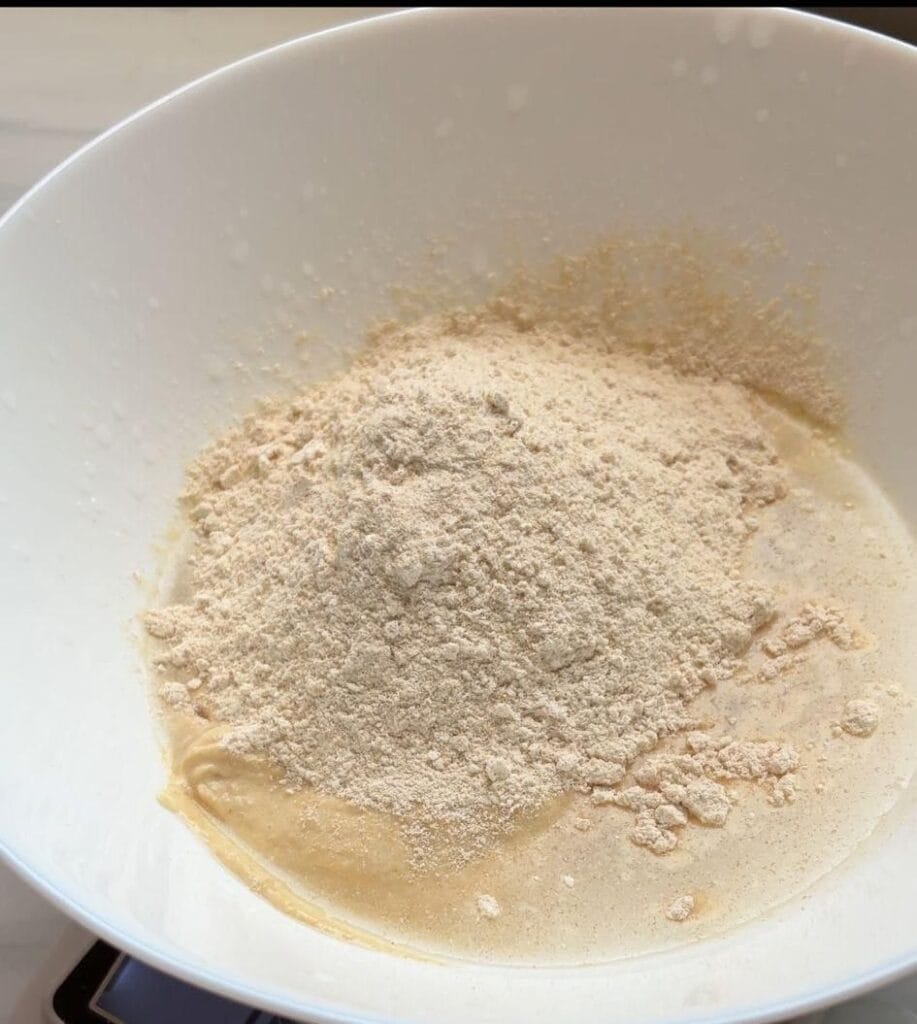
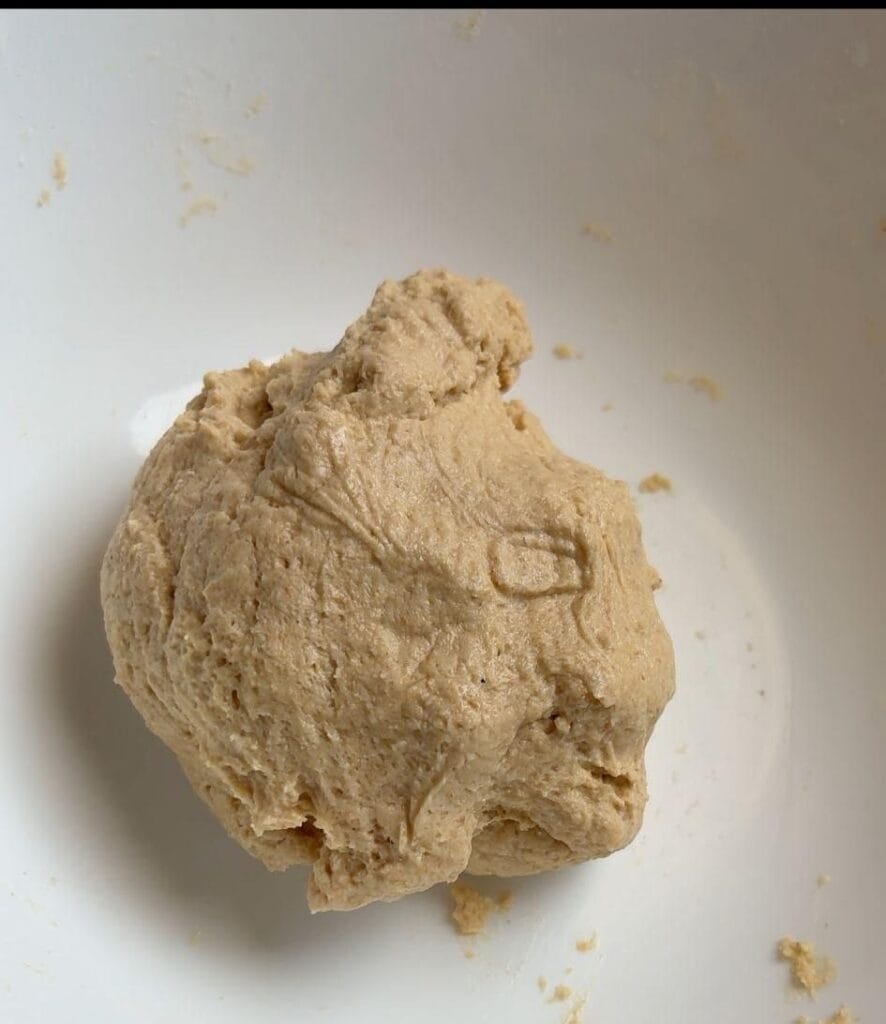
2. Transfer the dough into a glass container and cover it with a muslin cloth, or use cling film and poke a few holes with a pin.
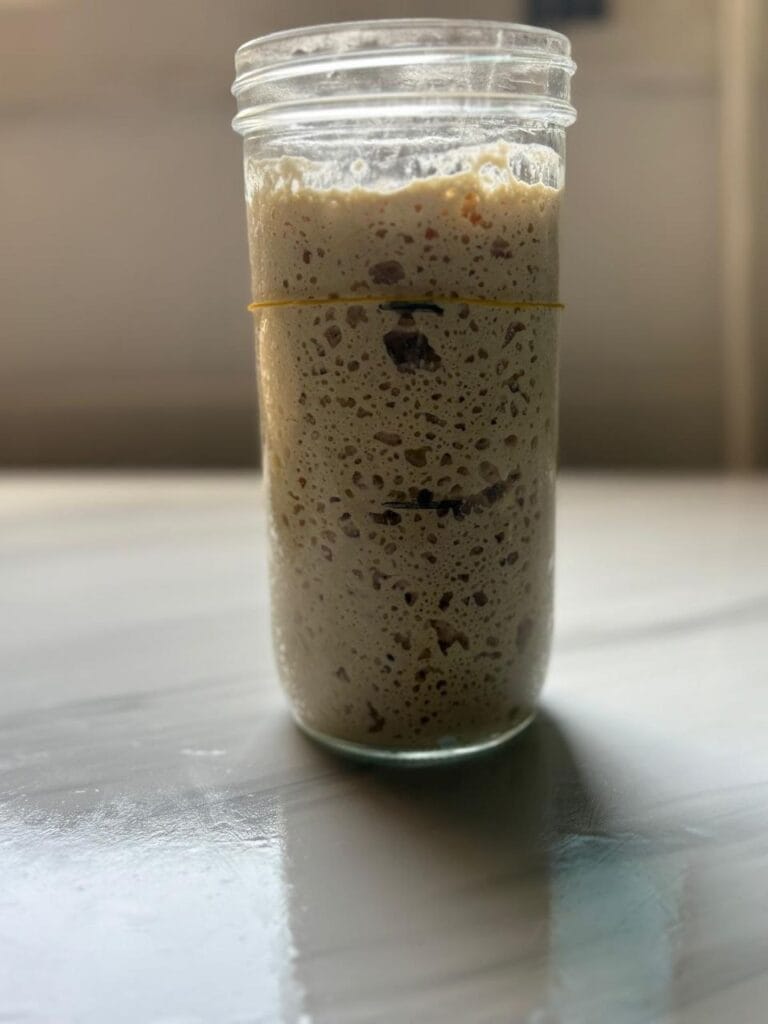
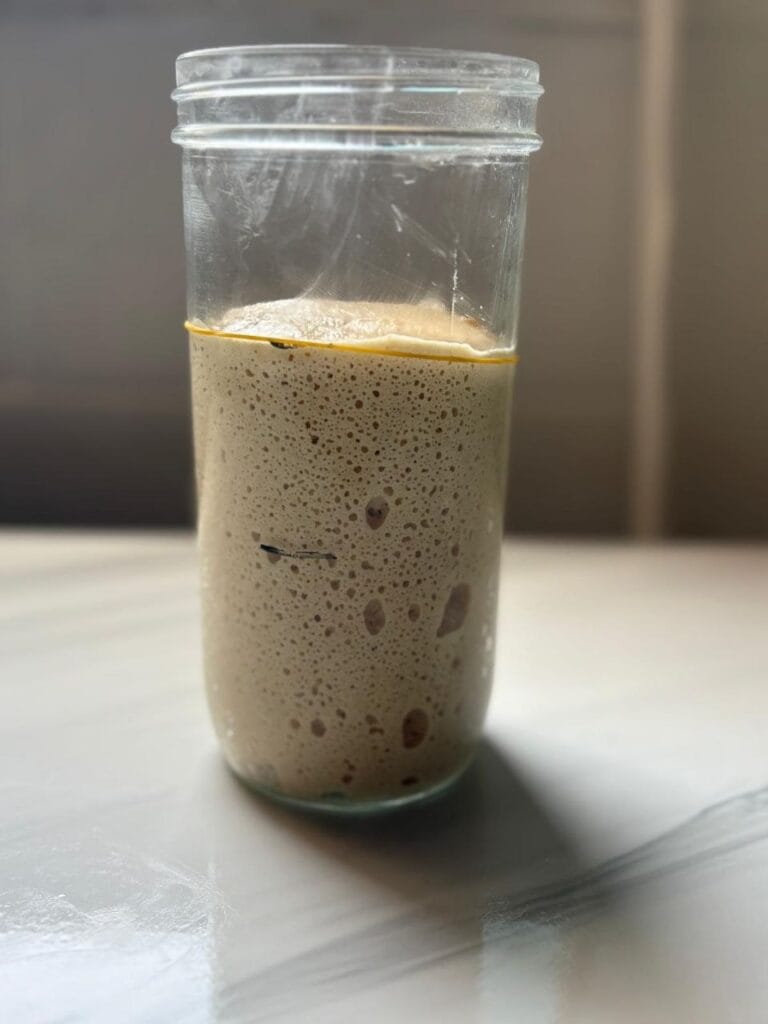
Mark the level of the dough on the container with a marker. I simply used a rubber band and placed it at the level where I expected the dough to double in volume. This makes it easy to monitor the rise.In 2.5 hours,It doubled beautifully!
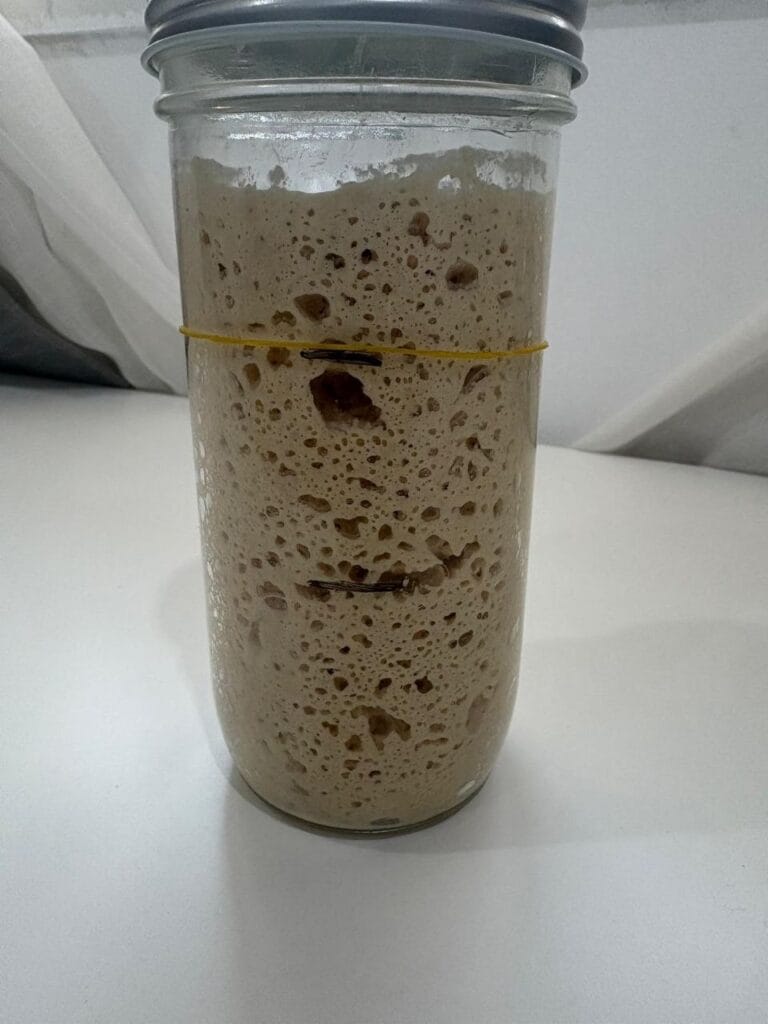
In 3.5 hours, It tripled and stayed there for 2 hours and then started to fall slowly. This is the ideal time to use your stiff sourdough starter in your sourdough recipes as its active and ready to use.
Understanding Active starter, Sourdough Discard and Maintenance Starter:
Active starter (same-day use):
If a recipe calls for 100 g of active starter, then from the above step, you take 100 g of freshly fed starter from your glass jar, use it to bake your sourdough recipe on the same day. This is your fresh, active sourdough starter, prepared on the same day as your bake day.
Maintenance Starter:
Set aside about 1 tablespoon from the glass jar in an air tight container to build your next batch of starter. This is your starter which you will use to feed every week to maintain it. So it’s called a maintenance starter.
Sourdough Discard:
Any extra starter that remains in the glass jar is called “Sourdough discard.“
How to maintain your Stiff Sourdough Starter forever and use it in your sourdough recipe
or
How to use the maintenance starter kept in the fridge for baking sourdough recipes
or
How to feed your maintenance starter from the fridge and maintain it
or
How do you convert your fridge maintenance starter into an active starter for baking the same day
The answer for all the above questions is almost the same.
After making the freshly milled stiff sourdough starter for the first time, you would have stored 1 tbsp of it in the fridge as maintenance starter for your future feedings.
In a wide bowl, take
- 1 tbsp of maintenance starter from the fridge
- 100 g freshly milled flour
- 85 g water
Mix well with your fingers and knead it for 2 minutes.
Place the dough in a glass jar, cover it with a cling film, poke holes on the cling film and leave it to rise.
Depending on the temperature, it may take around 2–4 hours to become active and nearly triple in size. Once it has risen well, use it in your recipe.
This is called fresh feeding cycle.
From your freshly fed stiff starter, take 1 tablespoon and store it in the side door of your refrigerator. Make sure it is kept in an airtight container. This is your maintenance starter that can then be used as the base for your future feedings. This cycle will be repeated whenever you bake your sourdough recipes.
FAQs
How many times should I feed my starter in a week?
It is best to feed your sourdough starter from the fridge at least once a week. Since I usually make sourdough bread or pizzas every week, I tend to feed my starter atleast once weekly, preferably early in the morning. I then allow it to become active and use the freshly fed starter in my sourdough recipe later that same day. This keeps the starter healthy, active, and ready for baking.
Can I skip feeding and use refrigerated sourdough discard directly in my sourdough recipes if I’m in a hurry?
Yes, you can do that. However, the resulting sourdough may take a little longer to rise—sometimes nearly 7 hours(in Qatar). The bread also becomes bit more sour to my taste.
When I do a fresh feeding and then use the starter on the same-day for sourdough recipes, I find that my dough rises much faster. In about 4 hours of bulk rise, I can bake it.
This method gives me a milkier, milder sourdough bread that is only slightly tangy. It is very beginner-friendly. For people who are not used to sourdough taste—especially children—they may not even realize it is sourdough and still enjoy it.
This is the purpose of feeding the starter every time before making sourdough recipes: first, to reduce rising time, and second, to reduce sourness. If someone prefers a more sour flavor, they can allow a longer fermentation with a double rise.
How can I use sourdough discard? Should I throw it away?
You do not need to throw it away—sourdough discard is actually very useful.
You can use sourdough discard to make:
- Brownies
- Cookies
- Pancakes
- Tortillas
- Rotis
- Crackers
I often add discard to tortillas, and they turn out beautifully soft with a mild sour flavor.
Important note:
These recipes use sourdough discard, but they still need:
- a resting time,
- a little fermentation time, depending on the recipe
This helps improve texture, digestibility, and flavor.
So instead of wasting it, sourdough discard becomes a great ingredient for everyday cooking.
Benefits of Consuming Sourdough Recipes
I never loved something which is very sour!
Yes, that’s me!
As a mother who is on the weight loss journey, everything I put into my mouth counts!
Whenever I eat sourdough breads, pizzas, or rotis, I feel full much sooner and stay satisfied for a longer time. As a result, I’m less likely to reach for that extra slice.
The same goes for desserts. With sourdough brownies and cookies, I find it easier to manage my weight. Alhamdulillah, I’m always happy to see the number on the scale gradually decrease.
Now, let’s talk about the science behind it.
Sourdough fermentation involves beneficial bacteria and wild yeasts that naturally break down some of the anti-nutrients present in the flour. This process can improve digestibility and may help lower the glycemic response of the bread compared to conventional bread. Because of this, sourdough products may be a better option for people with diabetes, prediabetes, or those who are trying to maintain or lose weight when consumed as part of a balanced diet.
For me, sourdough is not just about taste—it’s about feeling fuller, making better food choices, and supporting my health goals, Alhamdulillah.
Recipe Card
Stiff Sourdough Starter-made with fmf for beginners.
Ingredients
For the sourdough:
- ¼ tsp your old starter It can be your white flour starter/store bought whole wheat starter /borrow from a friend some starter.
- 50 g freshly milled flour(fmf)
- 40 g water
Instructions
- Mix: In a large bowl, combine the freshly milled flour, water, and old sourdough starter and knead for 2 minutes until you get a soft tortilla/roti consistency dough.
- Transfer the dough into a glass container and cover it with a muslin cloth, or use cling film and poke a few holes with a pin.Mark the level of the dough on the container. I simply used a rubber band and placed it at the level where I expected the dough to double in volume. This makes it easy to monitor the rise.
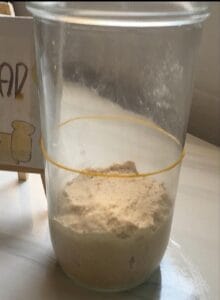
- Let it rise .The natural yeasts and bacteria in your environment will help facilitate fermentation. Depending on the temperature, after about 3-7 hours you should notice that the dough has not only doubled but may even triple in size.
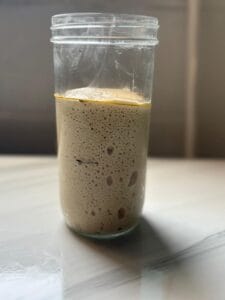
- Your freshly milled flour sourdough starter is now active and ready to use.
Maintaining Your Starter:
- If you plan to bake sourdough bread today, you can feed your starter early in the morning.Take:– 50 g mature fmf sourdough starter– 100 g freshly milled flour– 85 g waterMix well and leave it to rise.Depending on the temperature , it may take around 2–4 hours to become active and nearly triple in size. Once it has risen well, use it in your recipe.
Notes
- Sourdough fmf bread
- Sourdough fmf milk bread
- Sourdough fmf brioche bread
- Sourdough fmf Cinnamon rolls
- Sourdough fmf Cookies
- Sourdough fmf Brownies
- Sourdough fmf Pancakes
- Many other sourdough fmf recipes
Barakallahu feekum and happy baking.

With Love, Dar Al Khubz
Leave a Comment